Short answer
Start with the common size, then test the packed result
Papyrn's most commonly used tissue-paper size is 70 x 50 cm. Customers can use this versatile format across different products, so a custom size is less common. Consider a custom cut mainly when the product and packing method are stable and a physical trial shows why the standard sheet is unsuitable. A product photo alone cannot establish the best cut size or sheets used per order.
First decide what the paper is doing
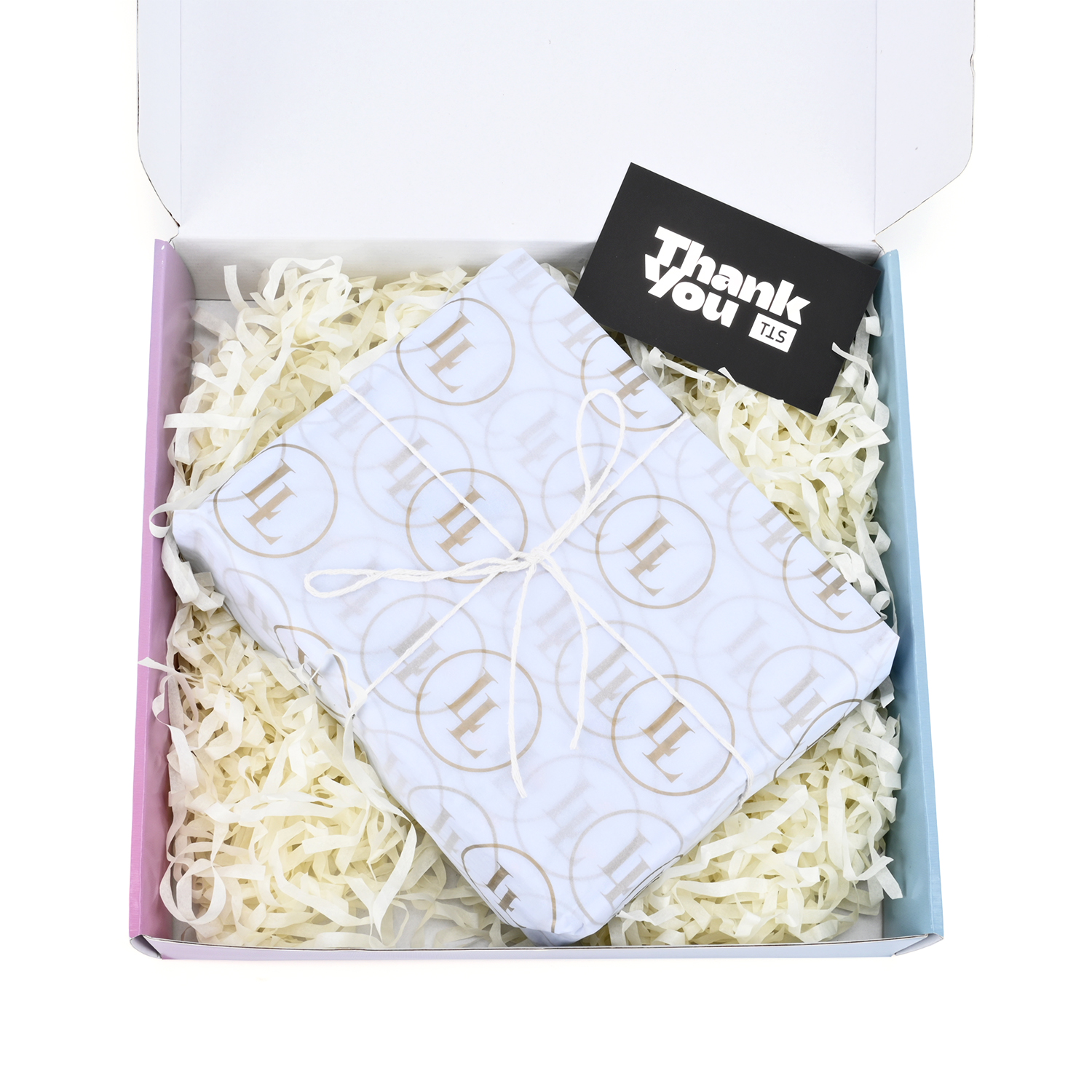
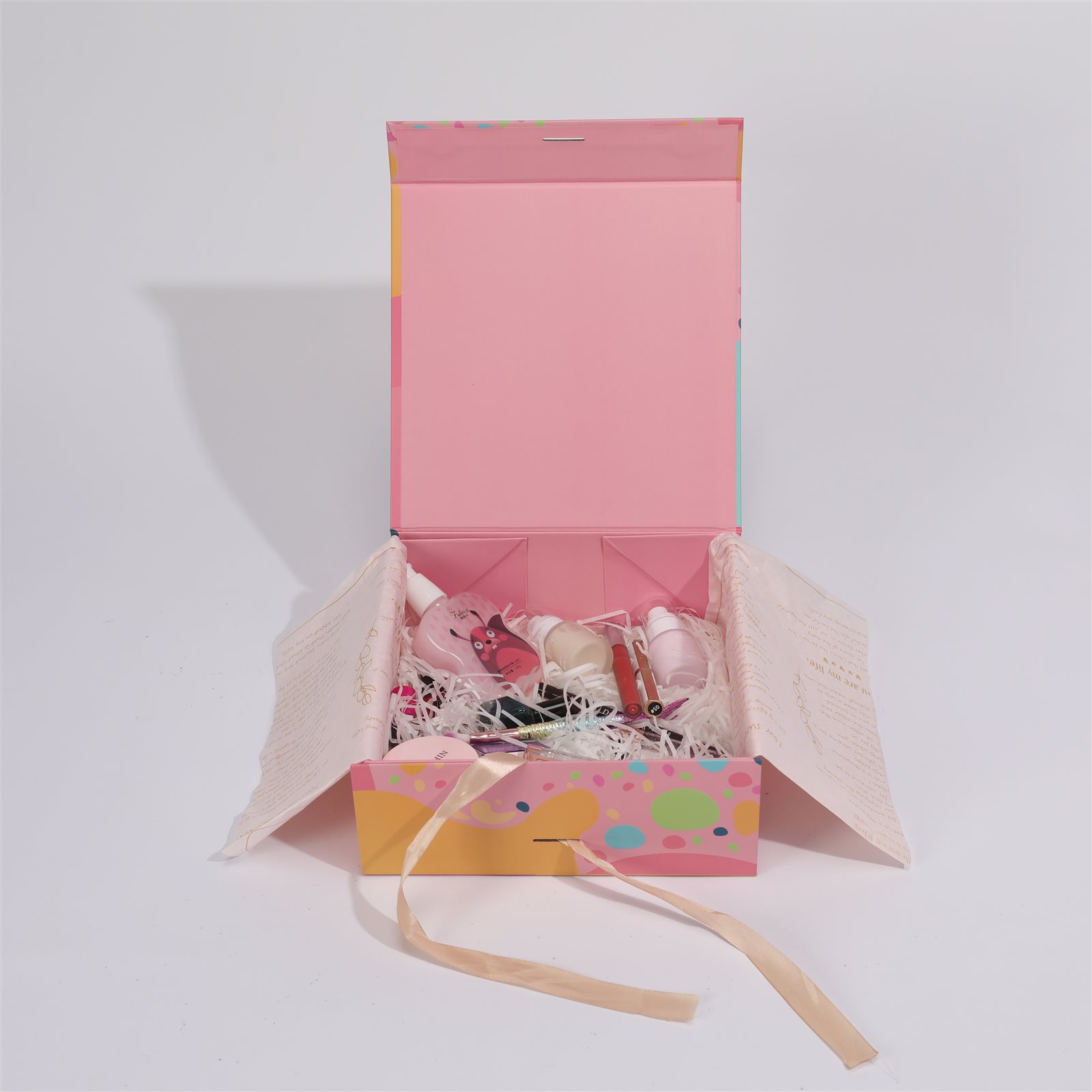
The photographs below show different applications, not one measured production run. They illustrate why two boxes of similar size can call for different tissue layouts.
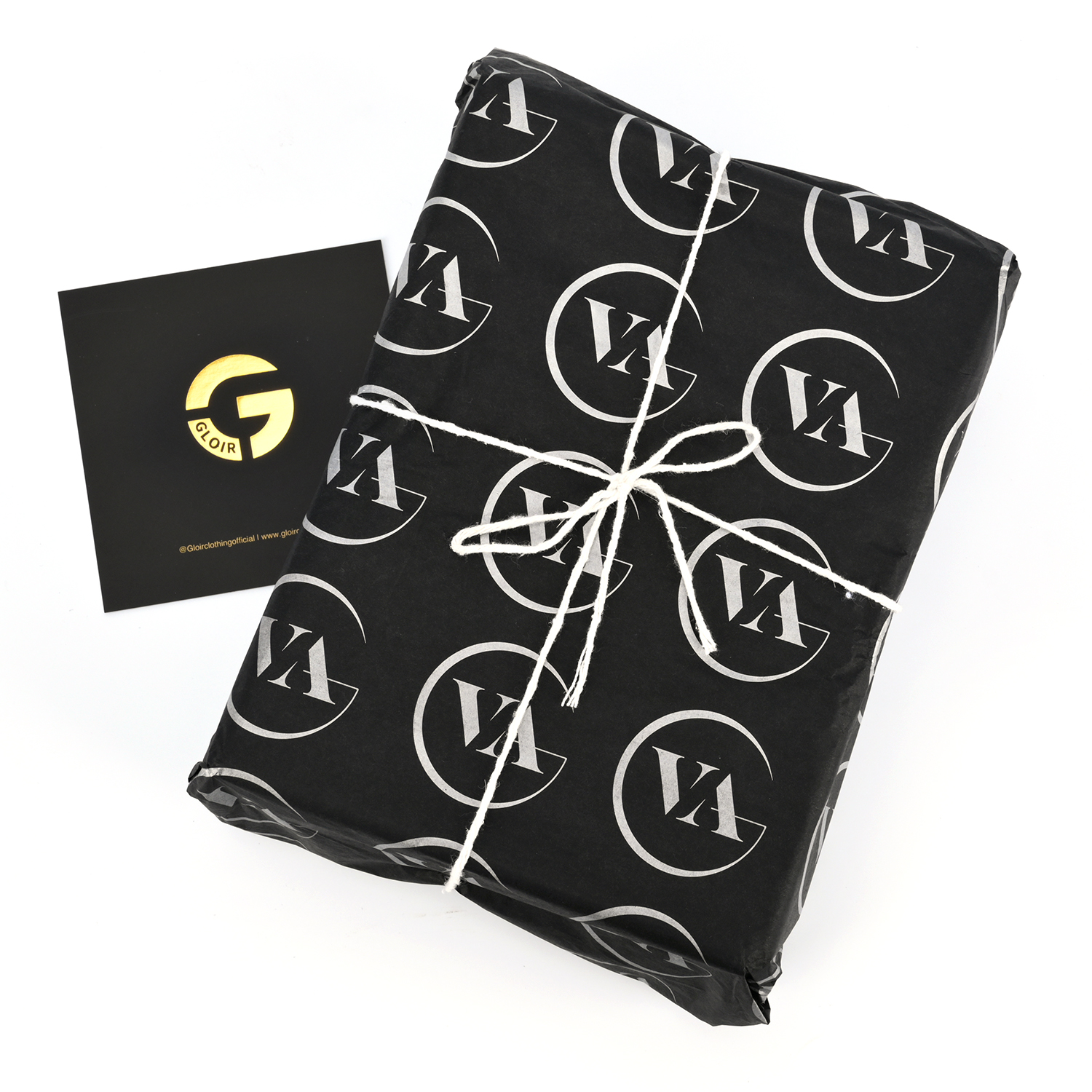
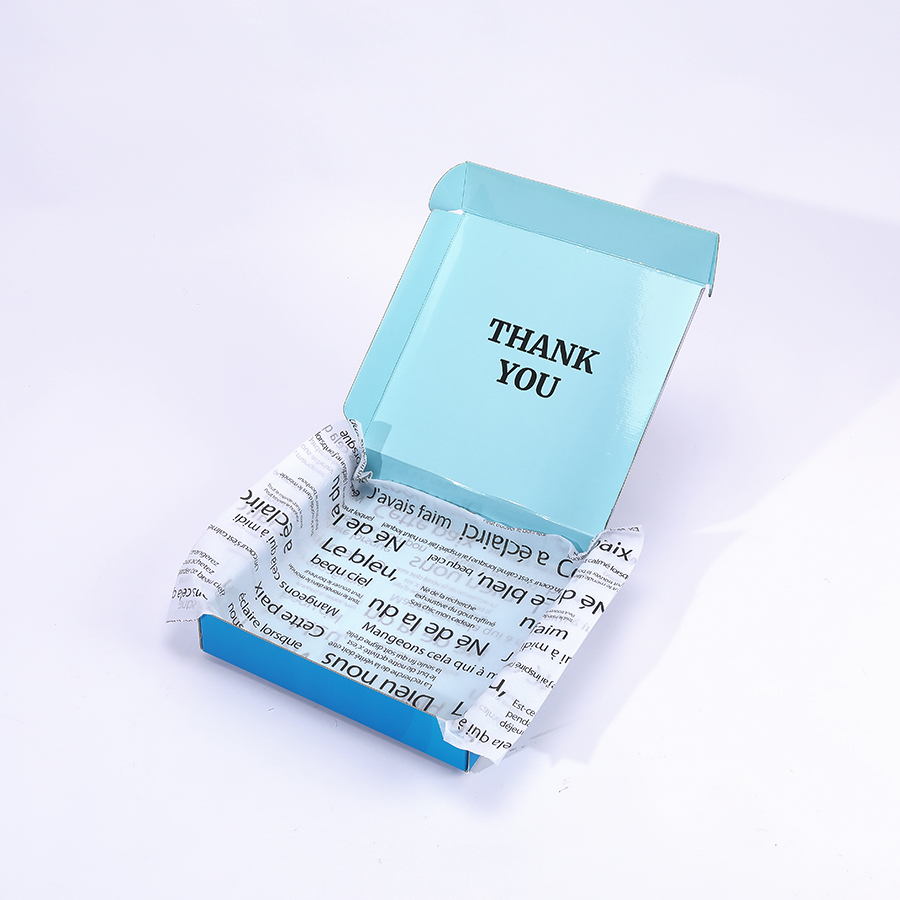
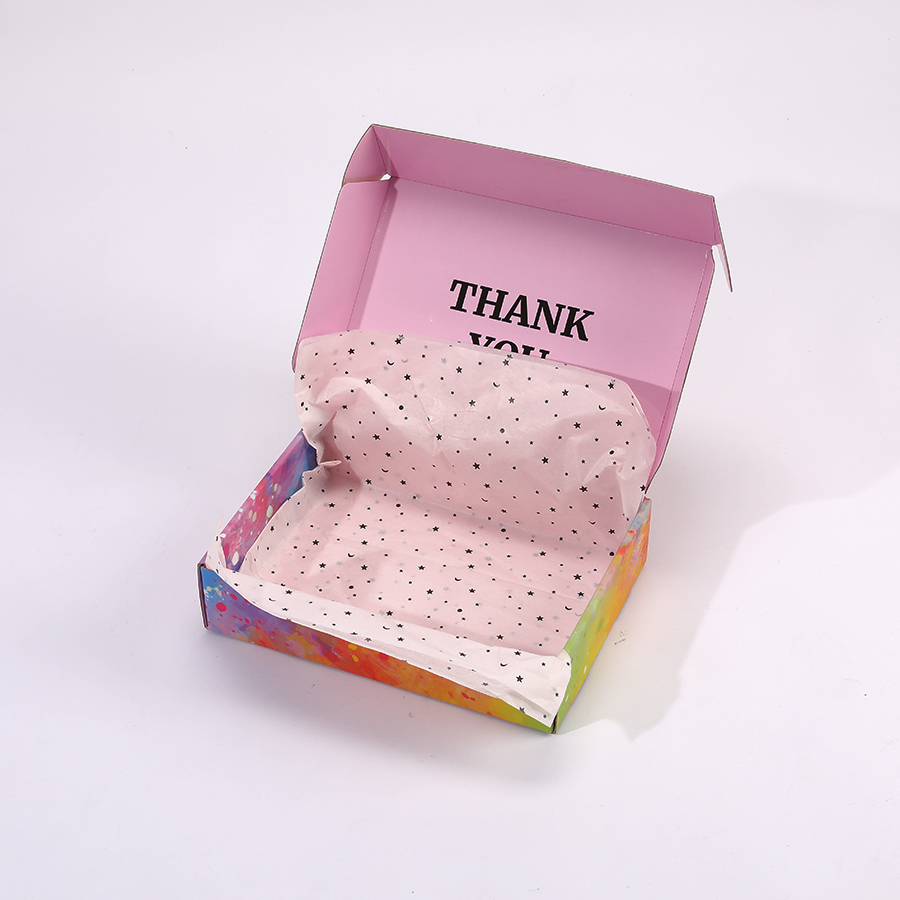
In the gift-box photograph at the top, printed tissue wraps an item while paper filler occupies space around it. These materials do different jobs. Tissue can conceal or present a product, but it should not be assumed to provide tested transit protection by itself.
Why 70 x 50 cm is a practical starting point
A customer packing several products may prefer one common sheet that can be folded differently from order to order. This flexibility is the main reason Papyrn sees 70 x 50 cm used most often. It does not mean every order needs a full sheet, or that one sheet is enough for every product. The orientation also matters: the same 70 x 50 cm piece can be turned before folding.
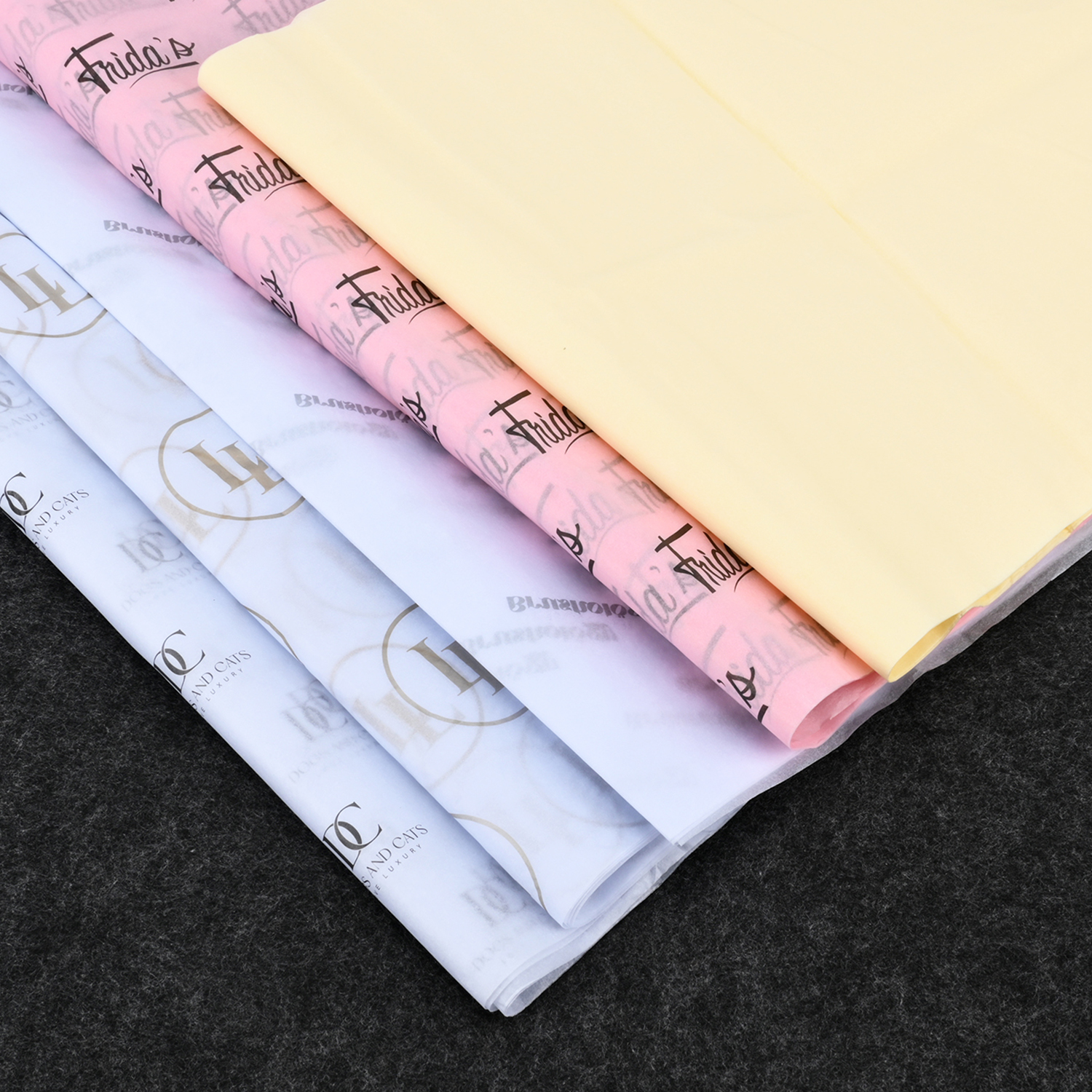
For paper color, print methods, repeat-logo artwork, MOQ and pricing, use our custom printed tissue-paper buyer guide. This article focuses on choosing the packed size.
Run a size test with the real product and box
- Record the product dimensions and the box's usable inside dimensions. Include any insert card, filler or other packed item that changes the space available.
- Try a full-size 70 x 50 cm unprinted sheet. Place it in the box in both orientations if the fold allows; do not estimate the result from a screen mockup.
- Pack as the fulfillment team would. Check where the paper overlaps, whether it hangs over an edge, and whether a repeat logo remains visible in the first view.
- Close the box with the actual contents in place. Confirm that tucked tissue does not prevent the lid or side tabs from closing cleanly.
- Record the exact sheet size, any cut, and the number of pieces actually used in that approved trial. Photograph the open and closed pack before approving artwork or a custom cut.
Only the completed trial can establish the sheet count for that packing method. A photo of a finished box does not reliably show whether the packer used one whole sheet, part of a sheet, or several sheets.
When should you request a custom tissue size?
Custom sizing is most useful when the intended product and wrapping method are consistently the same and a trial reveals a repeatable problem with the common sheet: too much unwanted overlap, a logo hidden by the fold, or paper that will not sit where the presentation requires. Record the proposed cut and repeat the pack test before changing production specifications.
When customers use the same printed tissue across several product sizes, a smaller dedicated cut can remove that flexibility. A custom size can also affect printing layout, quantity, packing and quotation. It is a project decision, not an automatic cost saving. Ask for a comparable quote and sample before switching.
Turn the approved trial into a buying quantity
After a repeatable pack has been approved, multiply the recorded number of whole sheets or cut pieces used per order by the planned number of orders. Then agree separately how many extras are needed for packing trials, mistakes and replacements. Do not apply a universal waste percentage without knowing the packing operation.
If one purchased sheet is cut into smaller pieces, record the approved cutting layout and usable pieces per sheet. The number of pieces packed is not automatically the same as the number of sheets purchased. Ask the supplier whether the final material will be delivered as full sheets or pre-cut pieces, and compare quotations on the same basis.
Published November 2, 2026. The 70 x 50 cm common size and less frequent custom-size practice reflect Papyrn's current guidance. The photographs were supplied by Papyrn and show several separate applications; their precise sheet dimensions, product measurements and per-order sheet counts were not provided. They are visual examples, not measured quantity case studies.