Short answer
Start with 300 gsm, then check the actual sample
Our commonly selected seed-paper weight is 300 gsm; 200 and 500 gsm are also available. These are weight options, not three different paper families. The embedded seed is chosen separately. Do not infer print quality, exact thickness, folding behavior or germination from the gsm number alone. Approve the card in its finished size and selected seed paper before placing the order.
What the three numbers tell you
Gsm means grams per square meter: it describes the paper's mass for a given area. It does not, by itself, specify sheet thickness, stiffness or the number of living seeds. Fibrous seed paper can vary across batches and seed choices, so ask to handle the material rather than choosing only from a number on a quote.
An available lighter-weight specification.
Whether its feel, print and handling suit your finished card and package.
Papyrn's most commonly selected seed-paper weight.
Readability, cut quality and fit with the chosen seed and artwork.
An available higher-weight specification.
Its actual feel, print and cut result on a physical sample; do not assume a particular thickness or seed performance.
We have not assigned a universal use case to 200 or 500 gsm. A campaign card, event insert and gift message can each have different artwork and packing needs; compare samples for the actual project instead of treating any weight as an automatic best fit.
Paper weight and seed choice are different decisions
Papyrn's seed paper is broadly one material type, offered in different grammages and with different embedded seed options. Selecting 300 gsm does not identify the plant inside it. Confirm the actual seed identity and availability independently, especially when the card will be shipped internationally or the planting text names a species. Our seed-selection guide explains that separate approval.
Nor is a heavier gsm figure a germination promise. Our viability guide explains why seed survival, a controlled germination test and a recipient's growing result are not interchangeable.
Keep finishing simple to protect the seed
Papyrn's normal recommendation is inkjet printing and die cutting. We do not normally recommend additional finishes because they may damage seed viability. Do not add lamination, foil, coating, embossing or another process from a conventional card specification without reviewing its effect on the selected seed paper. A special request needs a production discussion and relevant testing before it becomes an approved specification.
We also normally make seed-paper cards as flat sheets; folding can crack the paper. If an opening card is required, discuss a separate conventional folded card with a flat seed-paper insert rather than assuming the plantable sheet itself can be scored and folded.
A useful side-by-side sample check
- Keep the finished card size, artwork and seed option the same while comparing weights, so the paper weight is the main planned change.
- Handle the samples and confirm the actual feel, flatness and cut edges. Do not estimate thickness from a photograph.
- Print a physical proof on the selected paper. Check the smallest text, colors, margins and any QR code on the real sheet. See the inkjet artwork guide for print-specific checks.
- Place the card in its intended box or envelope and confirm it stays flat through a realistic packing sample.
- Approve the final weight, seed option, size and artwork together; do not substitute a different seed-paper batch without rechecking relevant claims.
What to specify when asking for a quote
Send the finished size, quantity, preferred 200/300/500 gsm option, embedded seed preference, destination country, and printable artwork. Papyrn's seed-paper cards start at 100 pieces. The material reference of about RMB 160 per square meter applies to 300 gsm seed paper only; it is not a finished-card unit quote or a rate for the other weights. Cutting yield, printing, packing and selected material can change the order price. Ask for an order-specific finished-card quotation and sample plan.
If you are unsure which weight to start with, request 300 gsm as the initial comparison point because it is our most common choice, then judge 200 or 500 gsm only against the physical result you need.
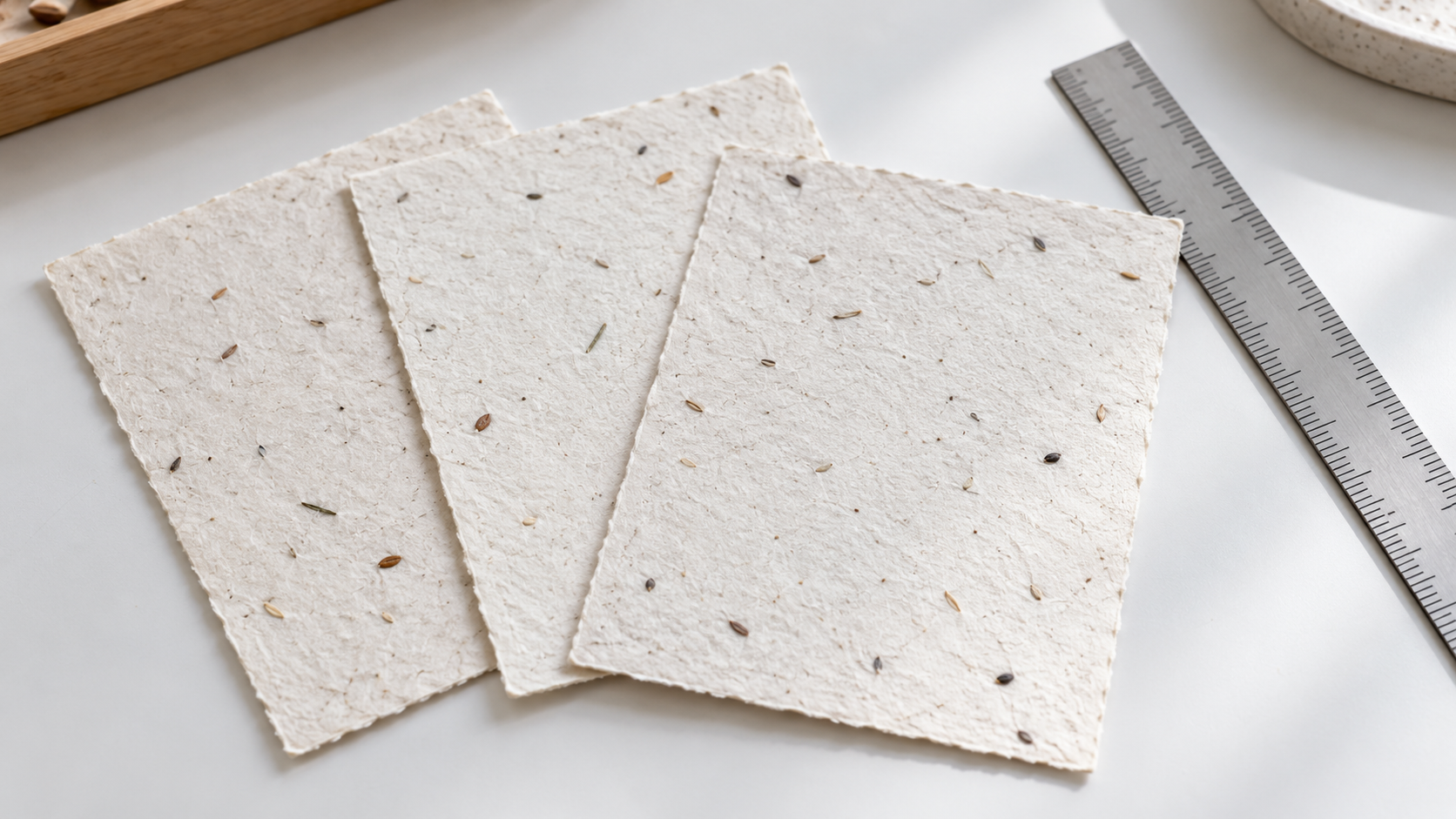
Published October 30, 2026; updated October 31, 2026 to clarify that the approximate RMB 160/m2 material reference applies only to 300 gsm seed paper. Available weights, the common 300 gsm choice and the finishing recommendation reflect Papyrn's current production guidance. No use case, thickness or seed-performance guarantee is assigned to a gsm value. The image is illustrative.
FAQ
Weight and finishing questions
What weight is most common for Papyrn seed-paper cards?
300 gsm is our most commonly selected seed-paper weight. We also offer 200 gsm and 500 gsm; approve the chosen weight on an actual sample before production.
Are 200, 300, and 500 gsm different kinds of seed paper?
They are weight options for the seed-paper material, not three separate categories of paper. The embedded seed option is a separate choice and must be confirmed for the order.
Does 500 gsm guarantee better seed performance?
No. Grammage describes mass per square meter, not a germination or viability result. Any seed-performance claim needs evidence for the relevant paper and finished batch.
Can seed paper be laminated or foil stamped?
Papyrn normally recommends printing and die cutting only. Other finishing steps are not routine because they may harm seed viability; discuss and test any proposed exception before promising it.