Short answer
Wrap or reveal with tissue; occupy empty space with filler
Tissue paper is a thin sheet used to wrap an item, line a box or create a visible first layer. Paper raffia or shredded-paper filler is loose material that can occupy gaps around products and help arrange the display. Use both when you want a wrapped item presented within a filled box. Neither material alone proves that fragile contents are protected during shipping; test the complete pack.
What each material does in the box
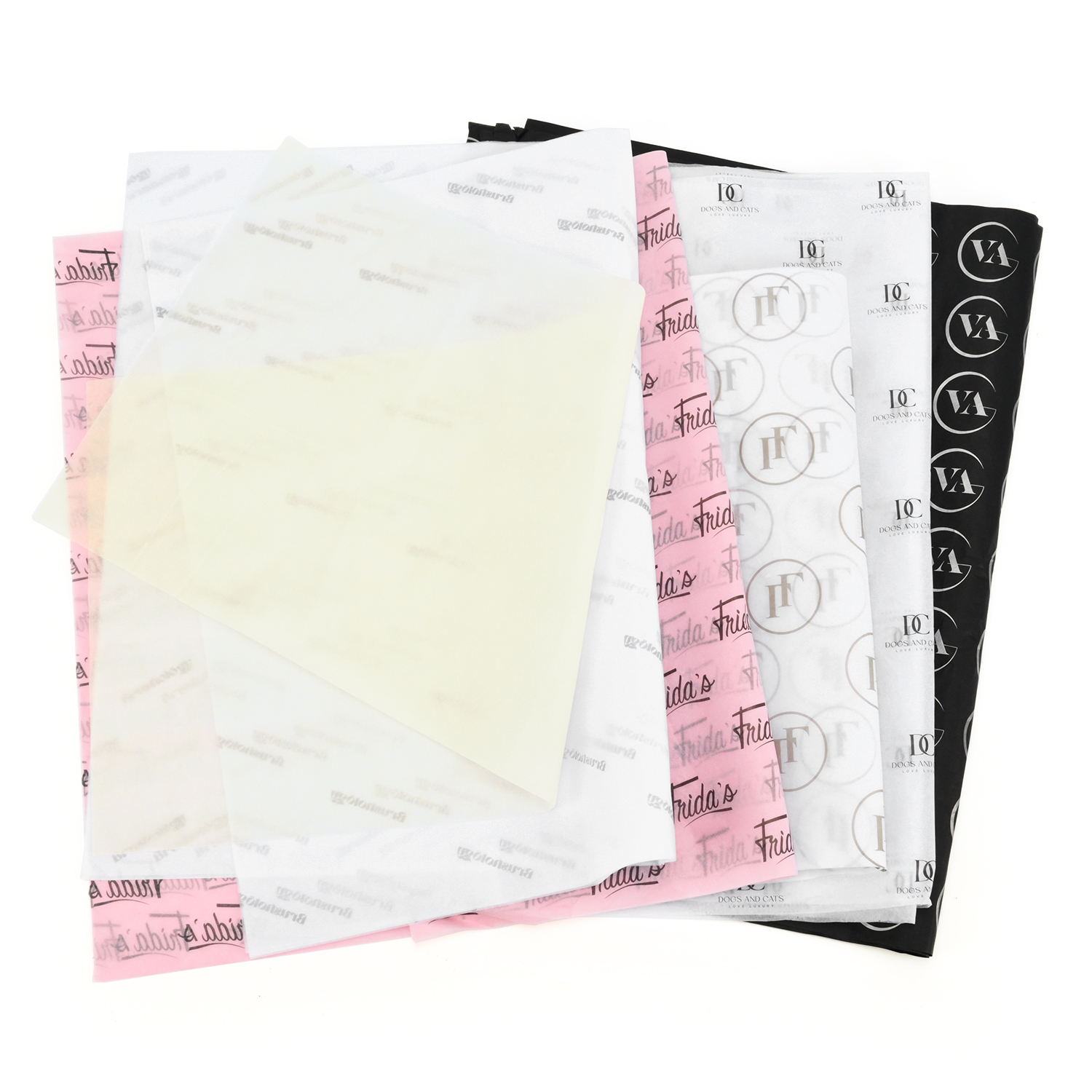
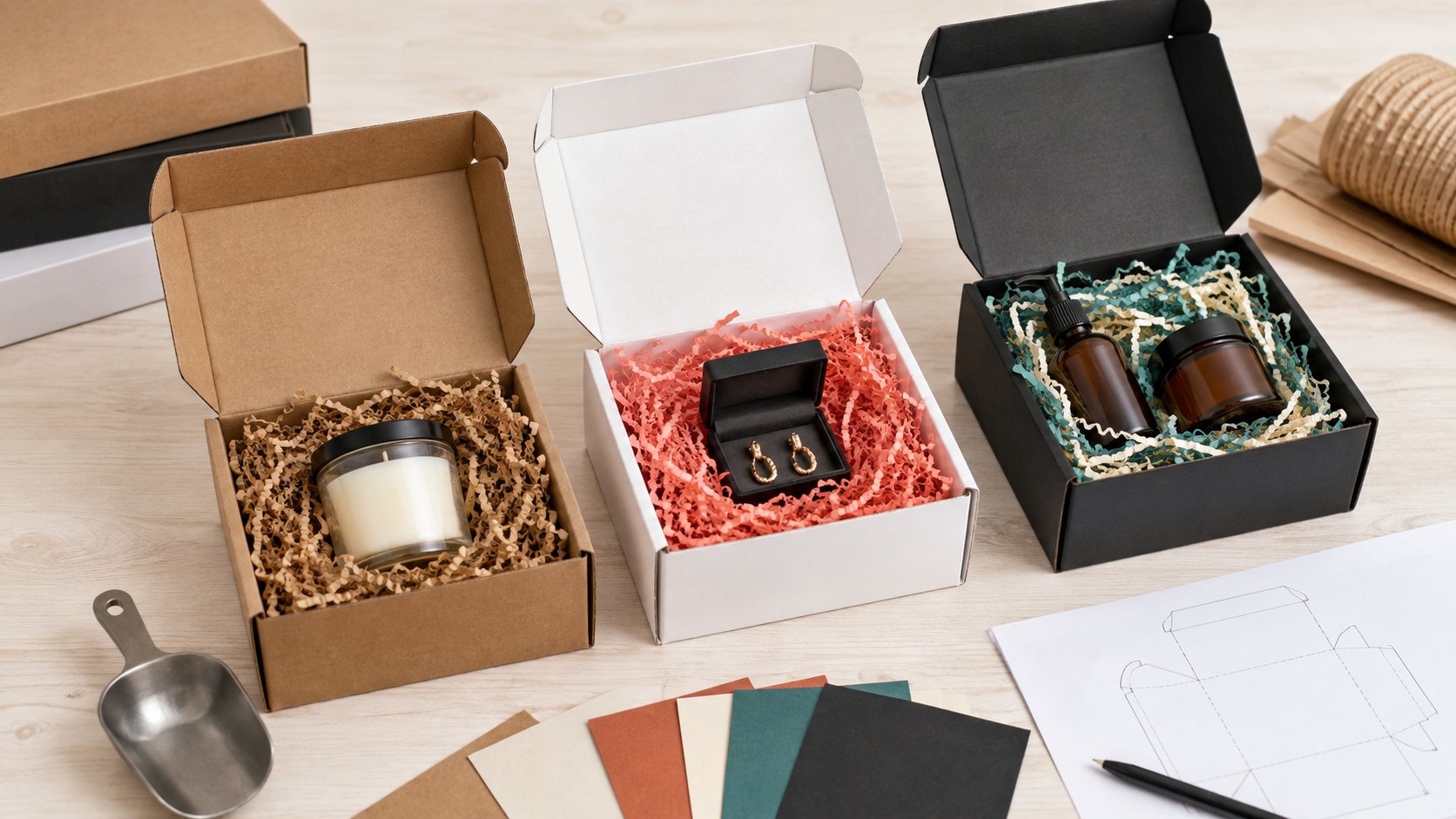
A sheet is useful when you want a clean fold, a concealed product, or a printed layer that opens before the item is seen. Loose filler is useful when the items leave visible gaps, have different heights, or need a more settled display. It is not a precision-fit insert: if a heavy or fragile object must be held in a fixed position, consider a fitted insert or another validated protective system.
Choose one, both, or neither
- Tissue only: a close-fitting product is already stable in the box, and you mainly need a wrap or branded liner. Check that folded paper does not block the lid or side tabs.
- Filler only: the presentation calls for a loose bed around the items, but a full wrap would hide the set or slow packing. Confirm that the items do not shift unacceptably.
- Tissue and filler: wrap the main item or frame the box with tissue, then place filler in the remaining spaces. Approve the look with every card, sticker and product included.
- Neither: a snug, secure pack may already meet the presentation and handling requirements. Extra material should have a clear purpose.
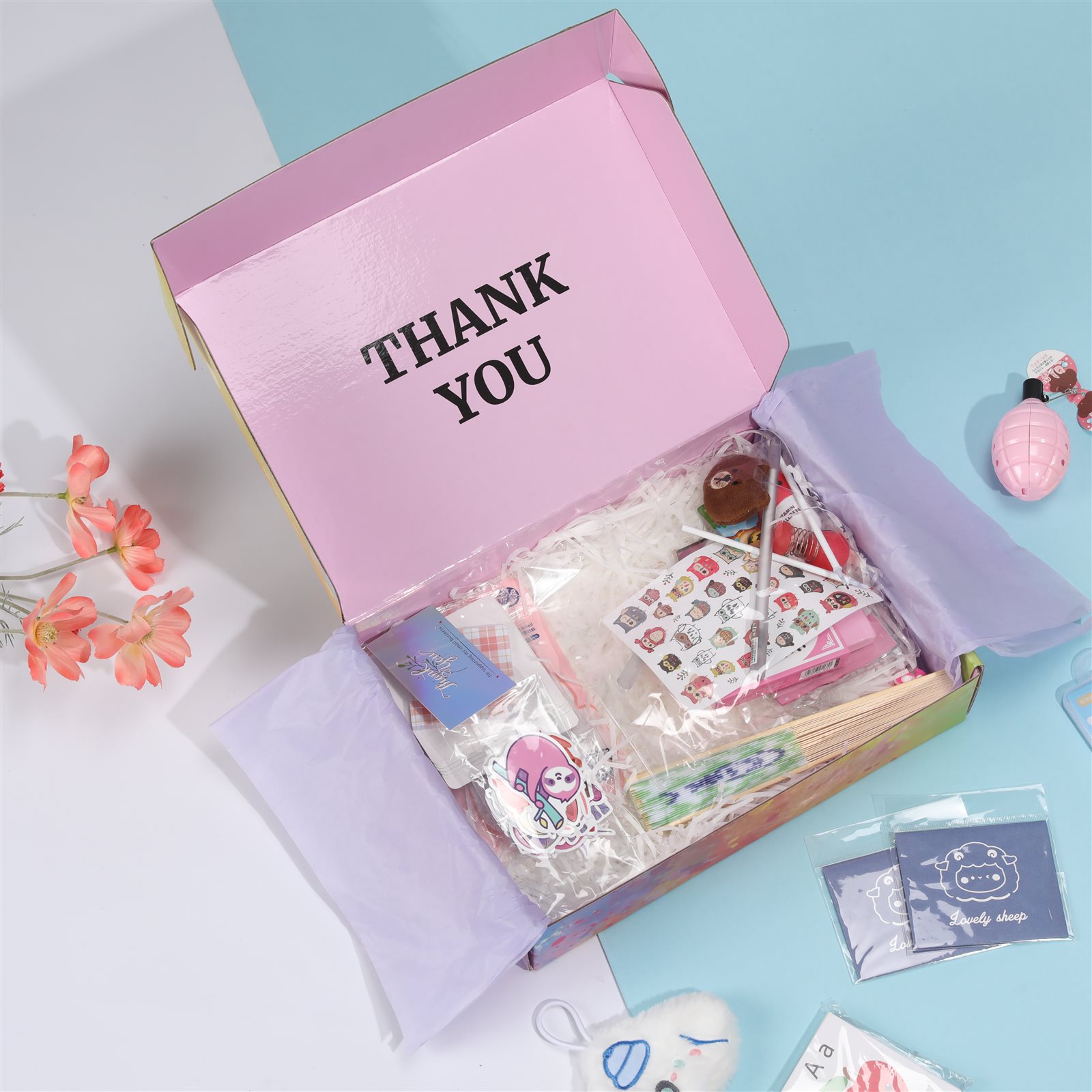
The hero photograph shows one possible combination: tissue is folded along the box sides while loose fill is visible among the products. It does not establish the exact paper size, number of sheets, filler weight, or the pack's shipping performance.
A practical pack test before ordering
- Pack the actual products in the intended box. Include cards, stickers, dividers and any retail packaging.
- Try tissue alone. Decide whether it is a full wrap, a liner, or a top reveal; close the box and check the folds.
- Add loose filler only where it improves the arrangement or addresses a specific gap. Note its actual weight per approved pack if you need to plan purchasing.
- Lift, close and reopen the box. Check whether contents move, the tissue bunches, or the lid and side tabs are obstructed.
- Photograph the approved open and closed pack. Record the actual tissue pieces and filler weight used, then test shipment conditions appropriate to the product before making protection claims.
A photograph cannot tell you how many tissue sheets or grams of filler another box requires. Those quantities come from a repeatable physical packing trial.
Keep the sourcing decision simple
If one tissue design is used for several products, Papyrn's common 70 x 50 cm sheet is a useful starting point; a custom cut is mainly worth considering after a fixed-use pack test. See the tissue-paper size guide for that decision. For filler styles, colors and how to establish a per-box weight, see the paper-filler guide.
When requesting a quote, send photos of the packed box, usable inner dimensions, product sizes and weights, planned order quantity, tissue artwork, filler color and whether the materials will arrive separately or as part of a coordinated packaging order. Price and shipping depend on the confirmed specification and destination.
Published November 3, 2026. Papyrn supplied the packing and material photographs. They illustrate different presentation choices, not a controlled comparison or a documented per-order consumption case. Confirm fit, handling and transit performance with the real products and box.